
Decorative glass has become a cornerstone of commercial interior design, blending practical performance with visual impact. Thoughtful glass treatments improve privacy, reinforce branding, and lift a space’s finish without sacrificing daylight or openness. Below, we outline the benefits of architectural and decorative glass films, design options for doors and elevator cabs, how these finishes reshape office layouts, and industry-specific uses. We also compare etched glass to modern film alternatives and explain why Engineered Group is a go-to partner for custom solutions.
Research highlights how glass treatments and glass art shape interior atmosphere and contribute to a space’s visual identity.
Decorative Glass Art: Interior Design & Aesthetics
This paper examines how blown and decorative glass pieces function as finishing elements in interiors—adding variety, creating atmosphere, and complementing contemporary styles. It reviews both practical and ornamental qualities of interior glass furnishings and anticipates continued innovation in glass design and applications. Decorative Blown Glass in Interior Furnishing, 2015
Decorative glass films deliver both form and function. They provide privacy while preserving daylight, offer a fast and economical alternative to full glass replacement, and allow businesses to introduce branded graphics, patterns, or textures across many surfaces. Their adaptability makes them ideal for offices, retail, hospitality, and healthcare environments.
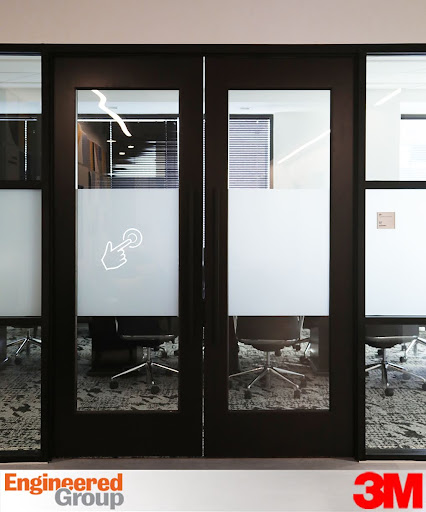
Well-chosen films let light through while obscuring sightlines. Frosted or satin films soften daylight, patterned films break up direct views, and layered graphics can block visibility where it matters most. The result: private, comfortable spaces that still feel open and well-lit—helpful for meetings, focus zones, and client-facing areas.
Architectural films are a practical renovation option because they apply directly to existing glazing. That keeps demolition and replacement costs down, reduces installation time, and minimizes operational disruption. While savings depend on project scale and materials, many clients realize substantial cost and schedule benefits versus full glass replacement—without sacrificing design quality.
Doors and elevator interiors are high-impact areas where decorative glass makes a strong first impression. From subtle privacy treatments to bold branded graphics, films and wraps let you tailor entrances and cabs to support your brand and circulation strategy.
Door applications range from frosted privacy bands and tonal gradations to precision-cut logos and full-coverage graphics. Patterned and colored films reinforce brand palettes while preserving light transmission; custom-cut elements can meet regulatory sightline requirements and ADA guidelines when needed. The result is an entry that reads clean, consistent, and professional.
Elevator wraps turn a functional space into a design opportunity. Films can introduce texture, color, and messaging that align with your lobby and wayfinding systems. Beyond aesthetics, durable finishes protect surfaces from wear and simplify maintenance—making elevator cabs both attractive and resilient.
Decorative glass solutions help balance openness and confidentiality across modern workspaces. When used thoughtfully, film and glazed partitions improve acoustics, define zones, and support collaboration without creating a boxed‑in feeling.
Frosted and patterned films are go-to choices for meeting rooms, phone booths, and glass-front offices. They create discrete zones while preserving daylight flow. Pattern selection—subtle gradients, geometric motifs, or brand-driven marks—lets teams match privacy needs to corporate identity and interior finishes.
Glass partitions with selective film preserve sightlines that encourage interaction while creating quieter, focused spaces. Because films are removable and replaceable, layouts can evolve with organizational needs—supporting flexible, collaborative workplace strategies without expensive retrofits.
Every industry brings unique priorities—privacy and cleanliness in healthcare, brand storytelling in hospitality, and clear wayfinding in retail. Decorative films can be specified to meet those priorities while delivering consistent visual quality across facilities.
Healthcare environments require discreet sightlines and higher hygiene standards. Privacy films provide visual separation in waiting and treatment areas, and some films include antimicrobial surface treatments to reduce pathogen persistence. Together, these solutions support confidentiality and infection-control efforts while keeping spaces bright and welcoming.
Hospitality designers increasingly use custom graphics, layered textures, and subtle translucency to shape guest experiences. Films enable narrative-driven entrances, private dining partitions, and branded wayfinding—delivering atmosphere without heavy construction and allowing seasonal or promotional updates.
Architectural films replicate many of the aesthetic qualities of etched or sandblasted glass but with added flexibility. Films are less costly, quicker to install, and replaceable—making them an attractive option for projects that need a premium look with lower long‑term commitment.
Decorative films typically cost less than etched glass, install faster, and can be removed or updated as branding or design preferences change. Films offer a broader palette of effects—frosted, metallic, textured, or printed—and can reproduce complex graphics that would be costly to etch.
Materials research continues to expand decorative possibilities—bringing innovations like structural color films and smart hydrogel systems into the design conversation.
Structural Color Films: New Directions in Decorative Materials
Recent work on structurally colored films explores ways to build multi‑color, patterned materials with complex internal architectures. Techniques such as freeze-derived templates can produce heterogeneous, multi-compartment hydrogels and films that open new possibilities for decorative and functional finishes in design applications.
Freeze-derived heterogeneous structural color films, S Miao, 2022
Applying film over existing glazing reduces demolition waste and extends the useful life of existing materials. This approach lowers embodied carbon compared with full replacements and gives designers the flexibility to refresh looks without major construction—supporting both sustainability and operational agility.
Engineered Group combines material expertise, design support, and installation know‑how to deliver tailored glass treatments for commercial projects. We help clients select the right films and finishes for performance, aesthetics, and budget—backed by quality materials and experienced installers.
Our solutions are supported by partnerships with leading film manufacturers and a team experienced in specifying, fabricating, and installing a wide range of architectural finishes. That network lets us offer durable materials, precise graphics, and the latest design options to meet project goals.
Project case studies show how film solutions can deliver meaningful cost and schedule advantages while elevating a building’s appearance. These real‑world examples highlight measurable savings versus full glass replacement and demonstrate how decorative films improve brand presence and occupant experience.
To discuss a project or explore options for your facility, reach out to our team.
Commercial films include frosted/satin films for privacy, patterned and textured films for visual interest, colored and metallic films for finish accents, and full‑color printed graphics for branding. Each option balances light transmission, privacy, and durability so you can match the film to the function and look you need.
Certain films reduce solar heat gain and glare, which can lower HVAC loads and improve occupant comfort. Some films also block UV light, protecting furniture and finishes from fading. When specified correctly, films can be a simple, cost-effective part of an energy- and occupant-comfort strategy.
Yes—outdoor-rated films exist for storefronts, exterior partitions, and covered outdoor enclosures. Selecting films formulated for UV exposure and thermal movement is critical; proper installation ensures longevity and performance under weather conditions.
Maintenance is straightforward: clean with a soft cloth and a mild, non‑abrasive cleaner. Avoid ammonia-based or abrasive products. Periodic inspection for edge lift or damage helps extend service life and keeps the finish looking crisp.
Films are versatile across offices, retail, healthcare, hospitality, and more. The right product choice depends on privacy needs, durability requirements, and aesthetic goals. For specialized environments—clean rooms, high-impact lobbies, or security-sensitive areas—we recommend consulting with a specialist to specify the correct film system.
Start with the primary objective: privacy, branding, glare control, or aesthetics. From there, consider light transmission, durability, and budget. Our team can provide samples, mockups, and installation guidance to help you select a film that meets performance requirements and complements your design.