
Many commercial renovation projects start the same way. Outdated or damaged surfaces seem to require removal and replacement. Architects, chief designers, and facility teams prepare for long construction schedules, disruptions, and rising costs before exploring alternatives.
However, full replacement is not always necessary, and alternative approaches are available.
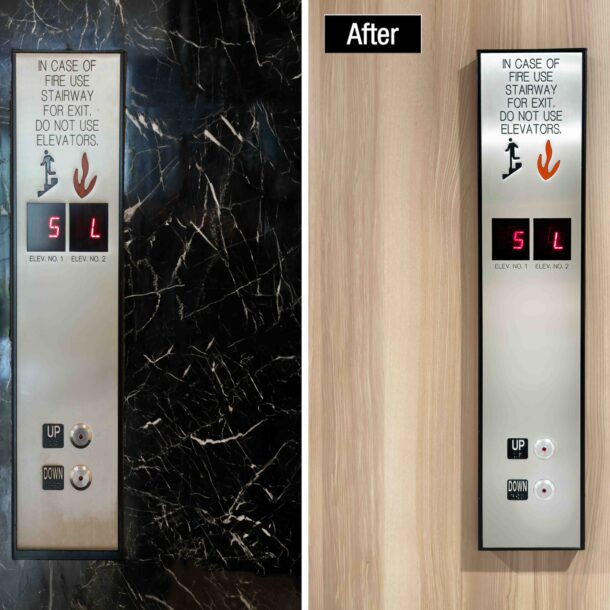
Architectural Finishes offer a different approach to commercial renovation by transforming existing surfaces rather than rebuilding entire environments. These products allow businesses to modernize doors, panels, millwork, walls, and shared spaces with authentic, indistinguishable appearances while reducing downtime and renovation expenses.
Despite these benefits, many commercial buyers find it challenging to understand where Architectural Finishes fit within renovation planning. Without clear information, organizations may overlook solutions that preserve budgets, shorten timelines, and maintain operational continuity.
To address this, we help clients understand how Architectural Finish applications work, where they deliver value, and how they support modern commercial renovation strategies across hospitality, office, healthcare, multifamily, and institutional environments.
Connect with Engineered Group today to discuss your renovation goals and see firsthand how Architectural Finishes can modernize commercial interiors while minimizing disruption.
eg disney dolphin resort
An Architectural Finish is a specialized surfacing solution. It is applied to existing elements to refresh or transform their appearance. Instead of removing structurally sound components, we resurface them with durable materials made for commercial settings.
These finishes imitate premium materials and textures with authentic detail. The result looks like new surfaces but preserves the original substrate.
Architectural Finishes commonly replicate:
This process allows architects and designers to achieve updated aesthetics while avoiding the operational and financial burdens associated with large-scale demolition and replacement.
Many organizations automatically associate renovation with reconstruction. When doors, wall panels, or millwork appear outdated, teams often move directly toward replacement specifications without considering resurfacing alternatives.
As a result, this default replacement mindset can create unnecessary complications.
Traditional renovation requires demolition, material disposal, labor coordination, and long installation schedules. Occupied environments then face weeks or months of noise, dust, and restricted access.
In contrast, Architectural Finishes offer a more efficient path for many renovation scenarios by minimizing demolition, cutting labor and material costs, and keeping workspaces functional. This approach often leads to faster project completion, less waste, and fewer operational disruptions.
Commercial facilities rarely have the option to pause operations for renovations. Hotels keep serving guests. Offices remain occupied. Healthcare facilities support patients around the clock.
With this in mind, Architectural Finish applications help reduce disruption by limiting demolition and shortening installation timelines. Existing surfaces stay in place while updated finishes create a completely refreshed appearance.
This streamlined process minimizes many common renovation concerns, including:
Architects and designers often balance ambitious design expectations with strict budgets. Premium replacements quickly raise project costs, especially for large environments.
Architectural Finishes help control renovation expenses by preserving existing infrastructure. Projects can often save up to 60% compared to traditional renovation, while still achieving high-quality, modern results.
This cost-saving flexibility, in turn, allows organizations to allocate renovation budgets more strategically across multiple spaces and phases.
RCC Engineered group
For example, Architectural Finish work covers a wide range of commercial applications. We help clients modernize high-visibility surfaces in occupied environments where operational continuity remains essential.
Commercial doors experience constant wear from daily traffic. Replacing large doors across office buildings, hotels, or healthcare facilities often creates unnecessary disruption.
Architectural Finish applications restore and modernize existing doors and frames with updated appearances tailored to the project’s design direction.
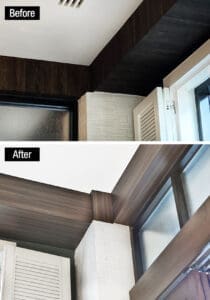
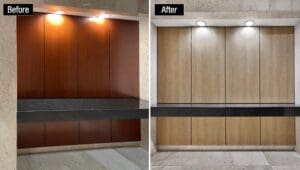
Decorative panels and custom millwork define many commercial interiors. Over time, these surfaces may appear dated even when they remain structurally sound.
We apply Architectural Finish directly to these elements. This creates refreshed looks without reconstruction. The approach supports faster renovations while preserving architectural continuity.
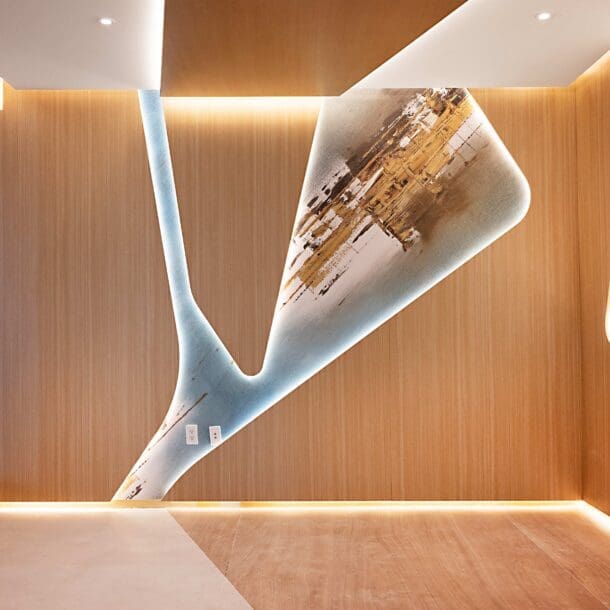
Reception spaces shape first impressions. Outdated finishes in lobbies and shared areas affect how visitors, clients, and tenants view the property.
Architectural Finishes help modernize:
These applications, ultimately, allow organizations to create refined environments with less downtime and lower renovation costs.
Contact Engineered Group now to identify specific ways Architectural Finishes fit into your next renovation strategy.
Architects and chief designers need renovation solutions that support creativity without complicating project execution. Architectural Finishes provide extensive flexibility through a broad range of finish appearances, textures, and patterns.
We work closely with designers to align finish choices with goals, brand standards, and operational needs. Whether you want wood aesthetics, metallic textures, or custom finishes, Architectural Finishes provide efficient interior updates.
Notably, this flexibility is especially valuable during phased renovations where maintaining consistency across spaces remains important.
Commercial environments change over time, often through many renovation cycles. Without careful coordination, updates can lead to inconsistent finishes across departments or shared spaces.
Architectural Finishes help unify environments by applying coordinated finishes across multiple surfaces and architectural elements.
This approach supports continuity across:
By following this approach, the result feels intentional, refined, and professionally integrated throughout the property.
Traditional demolition produces significant waste, especially when sound surfaces are discarded solely for design reasons.
Architectural Finish applications support sustainability by extending the life of existing components. Resurfacing cuts landfill waste and reduces the project’s environmental impact.
Furthermore, organizations gain the ability to modernize interiors more frequently without committing to full reconstruction during every update cycle.
Architectural Finishes offer strong value when projects involve:
These solutions are especially effective in hospitality, healthcare, office, multifamily, and institutional environments where maintaining operations during renovations remains a priority.
We help clients evaluate existing conditions and determine whether Architectural Finishes align with the project’s operational, financial, and aesthetic goals.
Understanding Architectural Finishes helps buyers make better renovation decisions. Instead of always replacing, organizations can try resurfacing to reduce downtime, control costs, and keep design quality.
Engineered Group supports architects and facility teams with Architectural Finishes for commercial spaces. We modernize doors, panels, lobbies, reception areas, walls, and shared spaces with durable finishes made for performance and aesthetics.
Our team works with clients to identify applications, coordinate finish choices, and support efficient planning in occupied spaces.
Reach out to Engineered Group today to explore how Architectural Finishes can transform your commercial interior space without the disruption of full replacement.