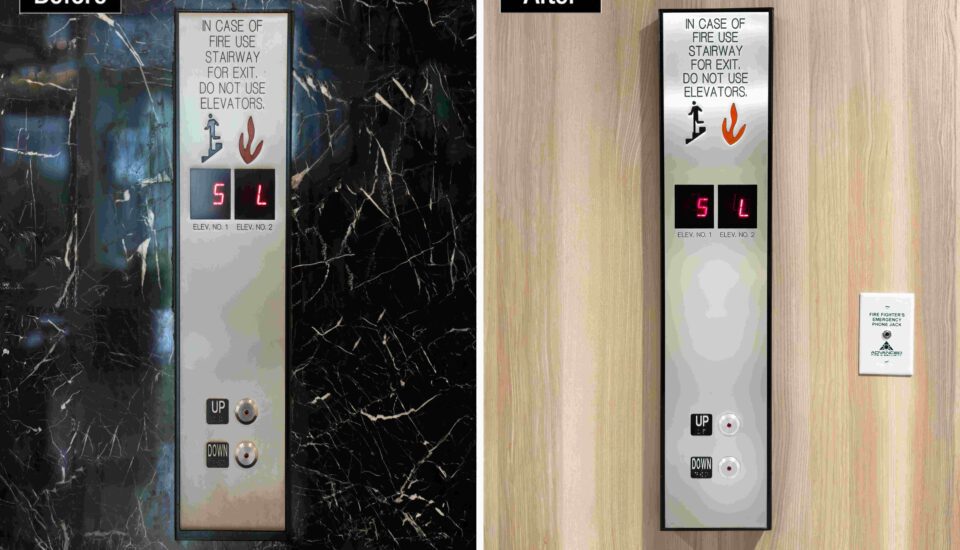
Planning a renovation often means making difficult compromises. You want an updated look that reflects your brand, but replacing walls, doors, elevators, cabinetry, and other surfaces can increase costs, create lengthy downtime, and disrupt

Planning a renovation often means making difficult compromises. You want an updated look that reflects your brand, but replacing walls, doors, elevators, cabinetry, and other surfaces can increase costs, create lengthy downtime, and disrupt
Hospitality properties must create memorable guest experiences while managing tight renovation schedules, operating budgets, and daily occupancy. Worn guest room doors, outdated millwork, damaged elevator interiors, and aging public spaces can affect first impressions, yet replacing these features often requires
Every space experiences constant wear, yet replacing walls, doors, millwork, elevators, and other high-visibility surfaces often comes with high costs, extended downtime, and unnecessary disruption. Many facility managers, architects, designers, and property owners know their spaces need improvement but hesitate
Many renovation projects begin with the assumption that worn surfaces must be removed and replaced. Doors with scratches, outdated millwork, aging wall panels, elevator interiors, and reception desks often end up on replacement lists before anyone evaluates whether they remain
Businesses need innovative solutions that allow them to refresh interiors efficiently while maintaining functionality. Engineered architectural finishes meet this demand, offering a cost-effective alternative to traditional renovations. These advanced finishes replicate the look and feel of premium materials, giving commercial