
August 28, 2026
Engineered glass is ordinary architectural glass that has been upgraded with a precision film system so it performs better and looks better, without tearing out a single pane. For Orlando property managers, designers, and facility owners, that distinction matters. Instead of demolition, permitting, and weeks of downtime, an engineered glass film is measured, cut, and applied to the glass you already have. The result is a surface that can add privacy, cut heat and glare, block ultraviolet light, hold together when struck, or carry a brand pattern, depending on the film specified.
Engineered Group has been doing this work across Florida since 2002. The company was founded by two veterans, Mike DeForest and Mark Ecker, and it designs and installs architectural finishes, decorative glass, and window film statewide, including the greater Orlando market from its Sanford base. This guide explains what engineered glass is, the film systems behind it, and why upgrading glass in place is usually the smarter move for a commercial building in Central Florida.
Key Takeaways
- Engineered glass upgrades existing panes. A film system is bonded to glass you already own, so you skip full replacement, permits, and long shutdowns.
- It solves four jobs at once. The right film delivers privacy and design, solar heat and glare control, ultraviolet protection, or safety and security, and Engineered Group reports up to 60% savings versus a full renovation.
- Ultraviolet performance is measurable. To carry The Skin Cancer Foundation Seal of Recommendation, window film must block 99% or more of UVA and UVB radiation.
- It fits Florida realities. Sun, glare, cooling loads, and hurricane season all argue for glass that manages light and resists impact.
- Credentials matter. Engineered Group is a 3M Authorized Dealer with LEED and ASID credentialed staff, so specifications are matched to the space, not guessed.
What Does Engineered Glass Actually Mean?
Engineered glass keeps your existing windows and glass partitions and changes what they do, and Engineered Group reports savings of up to 60% versus a full renovation on most architectural finishes projects. The glass stays. A thin, durable film is bonded to it to change how light, heat, ultraviolet radiation, and impact behave at that surface.
That is different from buying new glass. Engineered Group does not swap your curtain wall for a new one. The team specifies and installs a film matched to the goal, then applies it cleanly to the existing pane. Because the glass never leaves the frame, most projects avoid the disruption that comes with demolition and reglazing. A conference room can go from clear to private in a day. A sun-baked west elevation can get solar control without a single window being pulled.
What film delivers
What engineered glass actually changes
UV protection, design range, service life, and the saving against replacement.
The Skin Cancer Foundation Seal of Recommendation criteria; International Window Film Association (film can reduce ultraviolet impact up to 99%); 3M Fasara range; Engineered Group's own published lifespan and savings figures.
The phrase covers a family of solutions rather than one product. Decorative glass films add pattern and privacy. Sun control films manage heat and glare. Safety and security films hold broken glass together. Each starts from the same idea: the glass is the canvas, and the film is the upgrade.
Decorative Glass Film: Privacy and Branding Without Losing Light
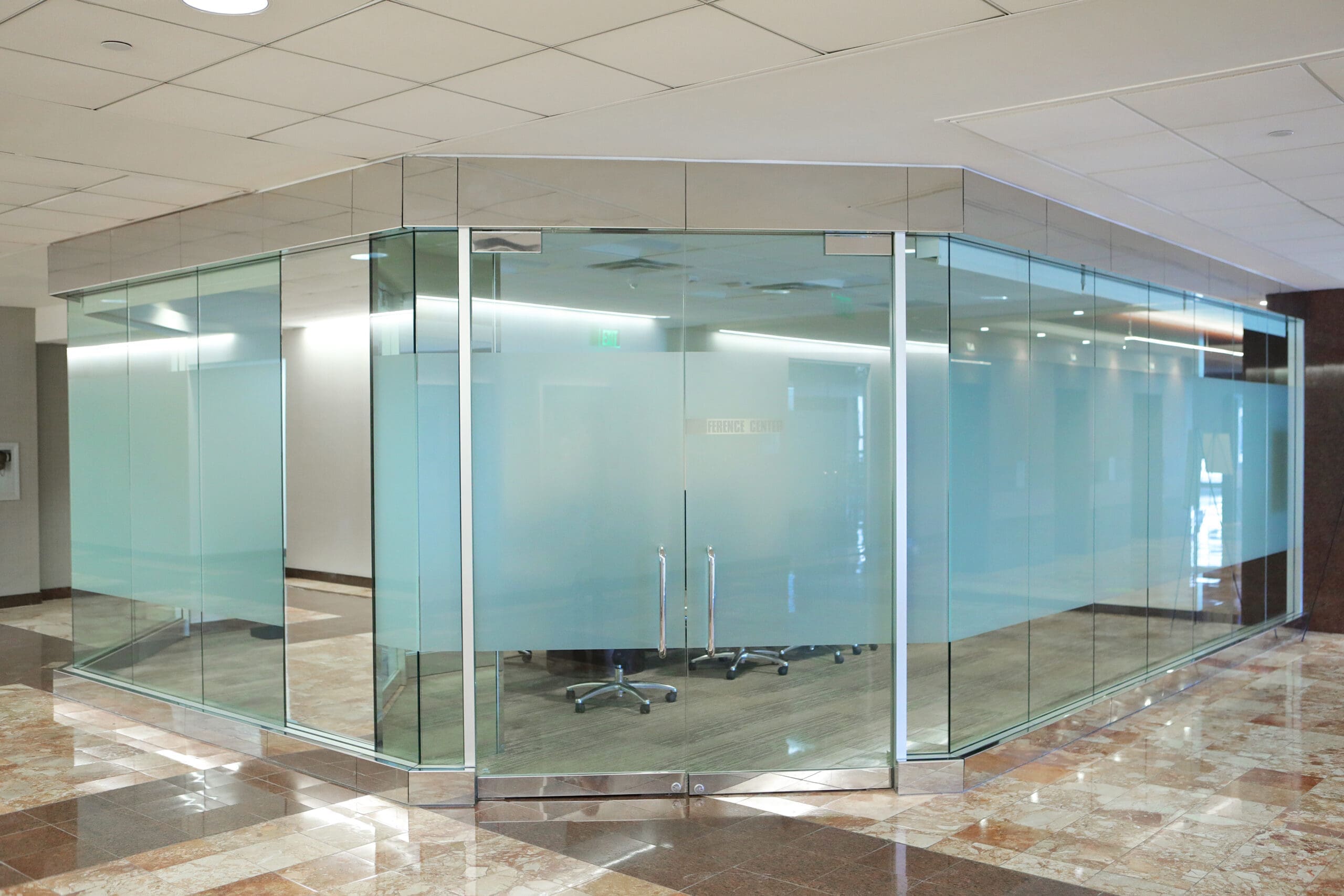
Decorative glass film gives you privacy and design while keeping the daylight, and 3M Fasara glass finishes alone offer more than 100 unique designs, patterns, and textures. Engineered Group installs these 3M Fasara decorative glass finishes as durable, flexible, non-PVC polyester films with a pressure-sensitive adhesive backing. Options range from frost and matte densities that create a nearly opaque façade for full privacy, to gradation finishes that transition from opaque to clear across a single pane.
This is where engineered glass earns its keep in an office. A glass-walled meeting room can stay bright and open while blocking sightlines. A lobby can carry etched-look branding or wayfinding without expensive sandblasted glass. A restaurant can zone a dining area with pattern instead of walls. Because the film is removable and replaceable, a rebrand or a new tenant does not mean new glass.
For designers and architects specifying interiors, the appeal is control. You choose the density, the pattern, and the finish, then apply it to the exact glass that needs it. That flexibility is why decorative glass film shows up so often in Orlando hospitality and corporate work, from hotels to headquarters.
Solar Control Glass: Cutting Heat and Glare in Florida Buildings
Heating, cooling, and ventilation dominate commercial energy use, and the U.S. Energy Information Administration reports that about 32% of energy use in U.S. commercial buildings in 2018 was for space heating, with ventilation and lighting each accounting for roughly 10% more. In a hot, sunny market like Orlando, the mirror image of that number is cooling. Sunlight pouring through untreated glass drives up the air-conditioning load and creates hot spots and glare that make spaces uncomfortable.
Solar control film turns everyday glass into engineered glass that manages that heat. Engineered Group’s commercial and sun control window films reduce solar heat transmission through the glass, which lowers heating and cooling operating costs and improves tenant comfort. The glass looks similar from the street, but the space behind it stops overheating in the afternoon sun.
For a Florida facility manager, this is a practical lever. You can treat the worst elevations, the west and south faces that take the most sun, without a capital-project window replacement. The film does the work of a higher-performance glazing unit at a fraction of the cost and disruption.
Ultraviolet Protection: Guarding People and Interiors
Engineered glass can block almost all of the ultraviolet radiation that ordinary windows let through, and to earn The Skin Cancer Foundation Seal of Recommendation, window film must provide data proving it blocks 99% or more of solar UVA and UVB. That matters indoors because, as the Foundation notes, UVA rays pass through window glass and reach people inside, contributing to premature aging and skin cancer risk. Untreated glass filters most UVB but lets UVA through.
The same ultraviolet light fades interiors. The International Window Film Association states that window film can reduce the impact of the sun’s ultraviolet rays up to 99%, which is a leading cause of fading in furniture, flooring, artwork, and merchandise. For a hotel, a retailer, or an office with expensive finishes, that protection pays for itself in avoided replacement and touch-up.
Engineered Group is a Skin Cancer Foundation partner and a 3M Authorized Dealer, so the ultraviolet performance it specifies is tied to tested products rather than marketing claims. If protecting people and interiors from ultraviolet exposure is the goal, engineered glass with a certified film is a direct answer.
Safety and Security Glass: Keeping Broken Glass in the Frame
Florida knows what flying glass costs, and NOAA reports that Hurricane Ian caused about $112.9 billion in damage, the first storm to exceed $100 billion in insured and uninsured losses in Florida. When windows fail in a storm, or in a break-in, the glass itself becomes the hazard. Safety and security film addresses that failure mode directly.
Engineered Group’s safety and security window film is designed to hold broken glass together in the frame rather than letting it fall or fly, which helps against impact, storms, and forced entry. Paired with the 3M Impact Protection Attachment sealant, the film keeps a shattered pane bonded in place. The company is direct about the limits, and states plainly that security film is not designed to eliminate break-ins or stop bullets. It is designed to slow down or mitigate an intruder and buy time for someone to react.
That honesty is the point. Engineered glass with security film is a layer, not a magic shield. For a Central Florida business weighing storm risk and after-hours security, it is a layer that turns a vulnerable pane into one that resists and delays. Combined with the company’s Class A fire-rated door film options, it gives facility owners a measured way to harden glass without replacing it.
Why Engineered Glass Beats Full Replacement for Orlando Projects
Engineered glass carries a long service life at a fraction of replacement cost, with a 12-year interior lifespan and up to 60% savings versus a full renovation on most projects, according to Engineered Group. New glass means demolition, disposal, permitting, lead times, and days or weeks of a space being unusable. Film means measuring, cutting, and installing on the glass already in place, often with the space back in use the same day.
The company brings 23 years of Florida experience to that work. Engineered Group is a 3M Authorized Dealer with LEED and ASID credentialed staff and a Reatec Authorized Installation Partner, which means the film specified for privacy, heat, ultraviolet, or safety is matched to the glass and the goal rather than guessed. That expertise shows up in local work like the Four Seasons Resort Orlando room and suite upgrades, where architectural finishes refreshed high-end spaces without gut renovation.
For an Orlando owner, designer, or builder, the calculus is straightforward. If the glass is structurally sound and the goal is better performance or a new look, engineering it in place with film beats ripping it out. You get the upgrade, keep the schedule, and keep the budget. Explore Engineered Group’s full range of architectural finishes, or contact the team for a free quote on an engineered glass project.
Frequently Asked Questions
Is engineered glass the same as replacing my windows?
No. Engineered glass keeps your existing panes and bonds a performance film to them. You get privacy, solar control, ultraviolet protection, or safety benefits without demolition, reglazing, or the permits and downtime that a full window replacement requires.
Does decorative glass film give privacy at night?
Frost and matte density films provide privacy day and night because they diffuse the view through the glass rather than relying on reflection. Engineered Group’s 3M Fasara finishes range from nearly opaque frost to graduated patterns, so the level of privacy is chosen to fit the room.
How long does engineered glass film last in Florida?
Engineered Group cites a 12-year interior lifespan for its films, and residential applications commonly last 12 to 15 years. Professional installation by a 3M Authorized Dealer protects that longevity, which matters under Florida’s intense sun.
Can film really block ultraviolet light and heat?
Yes. To carry The Skin Cancer Foundation Seal of Recommendation, window film must block 99% or more of UVA and UVB, and the International Window Film Association reports films can reduce ultraviolet impact up to 99%. Solar control films separately reduce heat transmission through the glass to cut cooling loads.
Does Engineered Group serve Orlando?
Yes. Engineered Group works statewide across Florida, including Orlando, Tampa, Daytona Beach, Sarasota, Miami, Fort Lauderdale, Naples, and Fort Myers, from its base in Sanford in the greater Orlando area. Call (407) 802-3345 for a free quote.