Security window film is an optically clear polyester layer bonded to the inside face of existing glass so the pane holds together when it is struck, whether by wind-borne debris in a hurricane or by someone trying to break in. For an Orlando or Central Florida building owner, that single upgrade turns a sheet of glass from the weakest point in the envelope into a barrier that buys time and keeps broken shards in place. It does not make glass indestructible, and it is not a substitute for code-rated storm protection, but installed correctly it measurably reduces flying glass, slows forced entry, and limits the damage that follows a broken window.
This guide explains what security film does, why it matters for buildings in the Orlando market, how it compares with other window films, and how to judge whether an installer will do the work right.
Key Takeaways
- Security window film is a bonded interior film that keeps glass fragments together on impact, reducing flying shards and slowing an intruder.
- Central Florida sits in a high hurricane-exposure zone. In 2024, Hurricanes Helene and Milton both struck Florida and were the two costliest U.S. disasters of the year.
- Flying glass is one of the most consistent sources of injury when windows fail, which is exactly the failure mode security film is built to prevent.
- Film is a glass-retention upgrade, not a replacement for code-required impact-rated glazing or shutters, and it is not designed to stop bullets or guarantee a break-in never happens.
- Installation quality drives performance. Look for a 3M Authorized Dealer, a proper frame attachment system, and a manufacturer warranty.
What security window film is and how it protects an Orlando building
Flying glass is one of the most consistent causes of serious injury when a building’s windows fail. A National Academies review of blast effects on buildings notes that penetration by glass fragments has been a repeated cause of death and serious injury, and that secondary fragmentation from flying glass was among the debris that caused most of the casualties in the 1998 U.S. embassy bombings. Ordinary annealed glass breaks into sharp pieces that travel; that is the hazard.
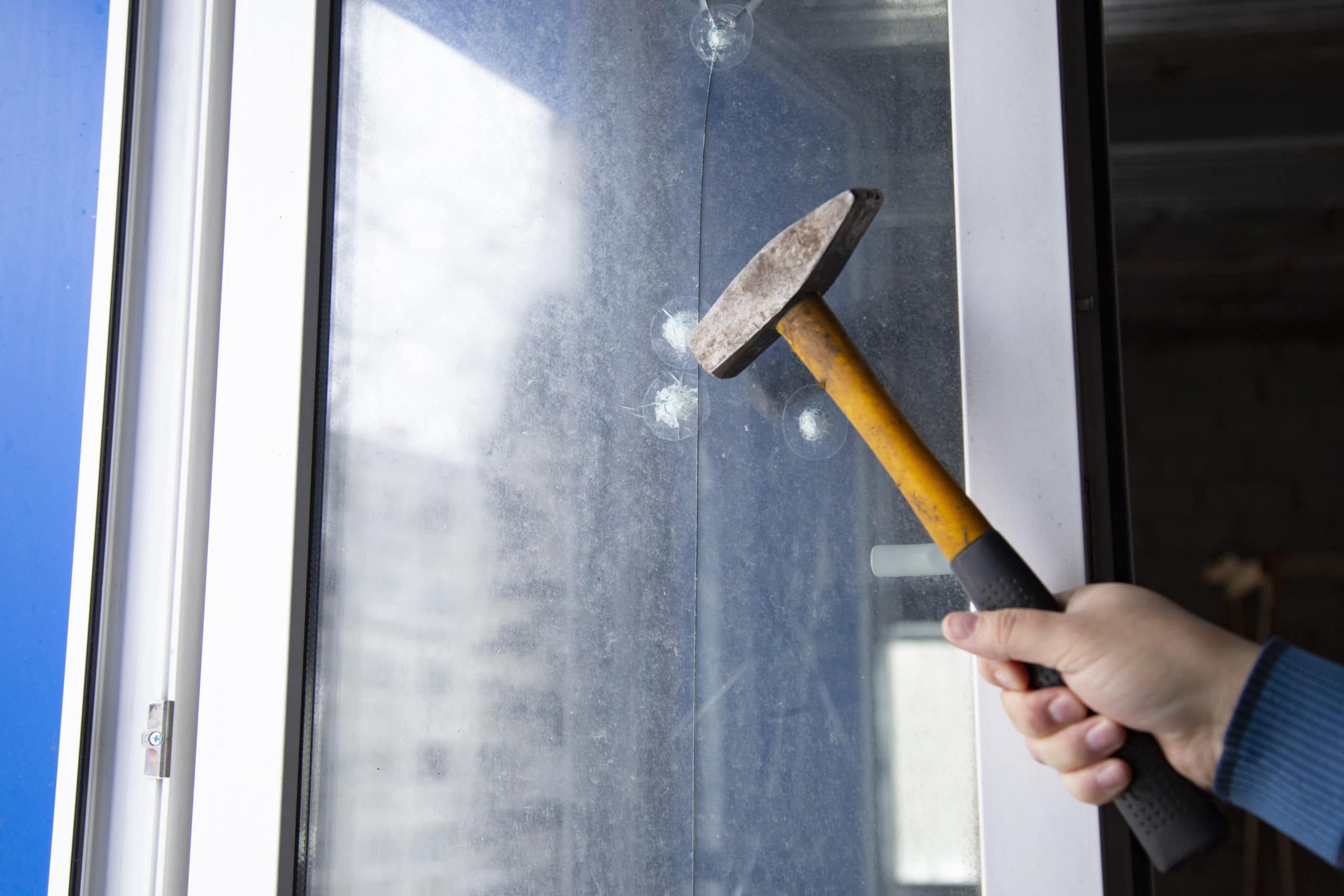
Security window film changes how the glass fails. It is a thick, multi-layer polyester film, far heavier than a standard tint, laminated to the interior surface of the pane with an aggressive adhesive. When the glass breaks, the film holds the fragments in a single flexible sheet instead of letting them scatter. Engineered Group installs 3M security films and can add the 3M Impact Protection Attachment, a structural sealant that bonds the filmed glass to the window frame so the entire pane resists being pushed out of its opening rather than just holding its own pieces together.
It is worth being clear about the limits. As Engineered Group tells clients directly, security film is not designed to eliminate break-ins or to stop bullets. It is designed to slow down and mitigate an intruder or an impact and to give people inside time to react. That honesty matters, because a film sold as bulletproof or hurricane-proof is being oversold. What you are buying is a meaningful upgrade in glass retention, not a force field. You can see the full scope of the company’s safety and security window film work for the specific products and applications.
Why Central Florida’s storm season makes glass a liability
Central Florida carries some of the highest storm exposure in the country, and the numbers from a single recent season make the point. According to NOAA’s tally of 2024 billion-dollar disasters, the United States recorded 27 separate weather and climate disasters that each caused at least a billion dollars in damage, including five tropical cyclones. Two of them hit Florida and were the two costliest U.S. disasters of the year: Hurricane Helene, which came ashore near Perry as a Category 4 storm and caused $79.6 billion in damage, and Hurricane Milton, which made landfall near Siesta Key as a Category 3 and caused $34.3 billion.
Zoom out and the pattern holds. NOAA reports that tropical cyclones have caused more than $1.5 trillion in damage across the United States since 1980, averaging about $23 billion per event, more than any other category of weather disaster. For an Orlando property, glass is usually the first thing to go. Once a window fails, wind and rain enter the building, interior pressure can spike, and the sudden load can peel back roofing and finishes from the inside out.
Security film helps by keeping a broken pane intact long enough to keep the building envelope closed, and by holding shattered glass out of occupied space. One important caveat for Florida owners: security window film is not a code-compliant replacement for impact-rated glazing or approved shutters in the state’s wind-borne debris regions. Where the Florida Building Code requires rated opening protection, film works alongside that system rather than instead of it. Treat film as a glass-retention and safety upgrade that complements, not replaces, your primary storm protection.
How security film stands up to break-ins and smash-and-grab
Forced entry through glass is a routine way that burglars get in. The FBI’s Uniform Crime Reporting Program found that 55.7 percent of burglaries involved forcible entry, with the average burglary costing the victim about $2,661 in property losses. A storefront window or a ground-floor office pane is often the target, because a single hard strike creates an opening.
Here is where the retention property pays off against an intruder rather than a storm. When someone hits filmed glass, the pane can crack, but the film keeps the sheet in place. There is no clean hole to reach through and no quick way to step inside, so the person has to keep hitting the same spot while the noise draws attention. That delay is the entire point. Security film converts a two-second smash-and-grab into a loud, drawn-out effort that many intruders abandon. For Orlando retailers, medical offices, and ground-floor commercial suites, that reaction time is often the difference between a scare and a loss.
The risk to glass
What security film is protecting against
Forced-entry burglary data, against Florida’s storm exposure.
FBI Uniform Crime Reporting Program; NOAA billion-dollar disaster data (27 such events in 2024, averaging about $23 billion per tropical cyclone).
Film also pairs well with other glass defenses. Many commercial buildings combine security film with anti-graffiti film, a sacrificial layer that lets crews peel off etched or painted vandalism and restore the glass without replacing it, so one filmed pane resists both a break-in attempt and everyday defacement.
Security film compared with sun control, decorative, and anti-graffiti film
Not every window film does the same job, and mixing them up leads to disappointment. The table below sums up the main types Engineered Group installs and what each one is actually for.
Security and safety film is the only category engineered mainly for impact and intrusion. If your goal is a cooler, cheaper-to-run building, a sun control window film is the right tool. If you want privacy or a branded look, a decorative glass film does that without the thickness of a security product. Many Orlando buildings use more than one, for example a security film on vulnerable ground-floor glass and sun control film on the upper sun-facing elevations. A qualified installer will help you match the film to each opening instead of selling one product for every pane.
How to choose a security window film installer in Orlando
Installation quality decides whether security film performs, so the installer matters as much as the film. The manufacturer’s own guidance is blunt about this: the performance and lifetime of window film is directly related to the quality of the installation. A premium film applied with trapped dirt, lifted edges, or no frame attachment will underperform a mid-grade film installed correctly.
Use these criteria when you evaluate an Orlando installer:
- Manufacturer authorization. A 3M Authorized Dealer is trained on the specific films and backed by the manufacturer’s warranty. Engineered Group has held that authorization for years.
- Frame attachment, not just film. Ask whether the installer offers a structural attachment system such as the 3M Impact Protection Attachment. Without it, a filmed pane can still be pushed out of its frame during a strong impact.
- Written warranty and product data. You should receive the film’s specification sheet and a clear warranty, not a verbal promise.
- Local track record. An installer that works across Central Florida understands the storm exposure, the permitting realities, and the building types in the Orlando market.
Engineered Group was founded in 2002, is owned by two U.S. military veterans, and works out of Sanford while serving Orlando and the rest of Florida. The team installs the full window film lineup and specializes in commercial glass. If you are weighing security film for a building, you can request a free estimate and get a straight answer about what film fits which openings.
Frequently Asked Questions
Does security window film make glass hurricane-proof?
No. Security film keeps broken glass together and reduces flying shards, but it is not a code-compliant replacement for impact-rated glazing or approved shutters in Florida’s wind-borne debris regions. Treat it as a glass-retention upgrade that works alongside your primary storm protection.
Can you see through security window film?
Yes. Standard security film is optically clear, so it does not change the look of the glass or block the view. If you also want privacy or heat control, that is handled by a separate decorative or sun control film, and the two can be combined.
Does security film stop bullets?
No. As Engineered Group states plainly, security film is not designed to stop bullets or guarantee that a break-in never happens. It is designed to slow an intruder or an impact and to buy time for people inside to react.
Is security window film only for commercial buildings?
No. It is common on storefronts, offices, healthcare facilities, and other commercial glass, but the same retention benefit applies to homes, especially large or ground-floor windows in storm-exposed areas.
How long does security window film last?
A quality film installed by an authorized dealer typically carries a manufacturer warranty measured in years and lasts for the practical life of the glass when maintained. Ask your installer for the specific film’s warranty terms in writing.
Ready to protect your building’s glass? Talk to a Central Florida team that installs security film every day and can tell you honestly what it will and will not do. Reach Engineered Group in Sanford at (407) 802-3345 to get started.