Wall resurfacing renews a commercial wall in place by bonding a micro-thin architectural film over the drywall, panelling or hard ceiling you already have, instead of demolishing and rebuilding the surface. For facility managers and designers in Orlando, it is the difference between a dated lobby that closes for weeks and one that is refreshed over a weekend. This guide explains what wall resurfacing is, which walls qualify, how the process runs, and how it compares with painting, replastering and full replacement.
Key takeaways
- Resurfacing renews the surface, not the substrate. Architectural film is applied over existing walls, so there is no tear-out and no construction debris headed for a landfill.
- Clients typically save up to 60% versus tearing a wall out and replacing it, according to Engineered Group’s wall and ceiling resurfacing pages.
- The wall has to be smooth, solid and non-porous. Condition is checked during a free estimate, and any prep is specified before work starts.
- Little to no downtime. The film is dry-applied on site, with no demolition, no construction dust, no VOCs and no waiting on fabricated panels.
- Resurfaced film lasts up to 12 years indoors, is cleanable, and can be patched so the repair is invisible.
What wall resurfacing actually is
The waste resurfacing avoids
US construction and demolition debris, 2018
Resurfacing bonds a film to the wall that is already there, so an interior refresh never enters this stream.
Source: U.S. Environmental Protection Agency, facts and figures about materials, waste and recycling, 2018.
The U.S. Environmental Protection Agency estimates that 600 million tons of construction and demolition debris were generated in the United States in 2018, more than twice the amount of municipal solid waste, and about 143.8 million tons of it went to landfills. A large share of that debris is interior tear-out: walls, ceilings and casework ripped out and thrown away during remodels. Wall resurfacing avoids that path entirely.
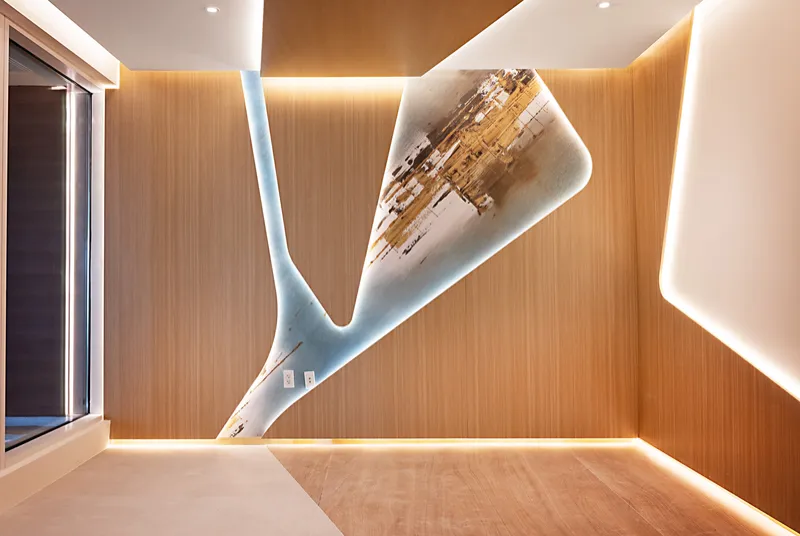
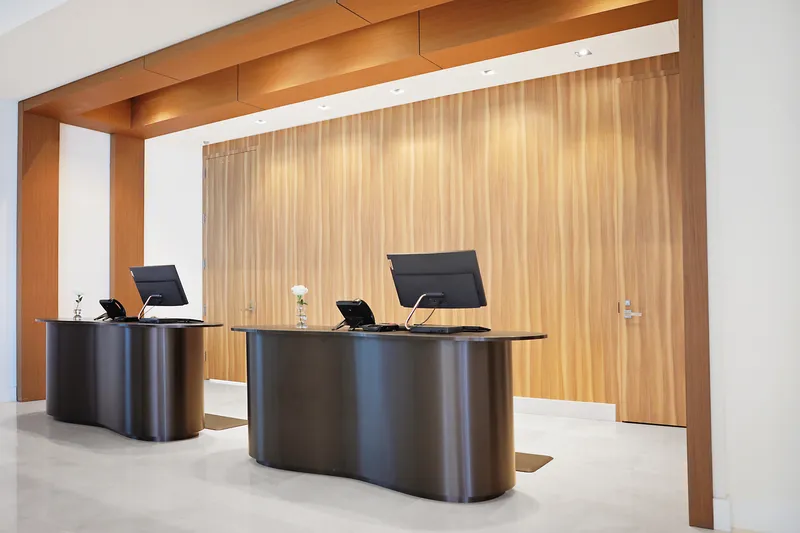
Instead of removing the wall, a resurfacing crew bonds a thin architectural film directly to the existing surface. Engineered Group’s wall and ceiling resurfacing service applies textured and patterned finishes over drywall, panelling and hard ceilings with no demolition and no dust. The film is part of the same architectural finishes family used on elevator cabs, columns and doors, so a whole interior can be renewed by one crew on one schedule. If you are weighing a broader project, our commercial interior resurfacing guide covers the full surface package.
Why Orlando commercial interiors get resurfaced
Orlando welcomed 76.7 million visitors in 2025, a 1.8% increase over 2024 and the highest total in the destination’s history, keeping it the most visited destination in the United States. Hotels, attractions, restaurants and the offices that serve them all feel pressure to keep interiors looking current, and a tired wall reads as a tired brand. Resurfacing lets an operating property update its look without closing rooms or floors.
Budget is the other driver. Private nonresidential construction was running at a seasonally adjusted annual rate of $773.0 billion in August 2026, and renovation competes for a slice of that spend. When the goal is a new surface rather than a new structure, resurfacing reaches the same visual result for a fraction of a full build-out. Engineered Group serves the whole region from its Orlando architectural finishes base and self-performs statewide across Florida.
Which walls can be resurfaced
There are an estimated 5.9 million commercial buildings in the United States as of the 2018 CBECS, and much of that stock is decades old with interiors that have been painted and repainted many times. Age is not the deciding factor for resurfacing, though. The substrate is.
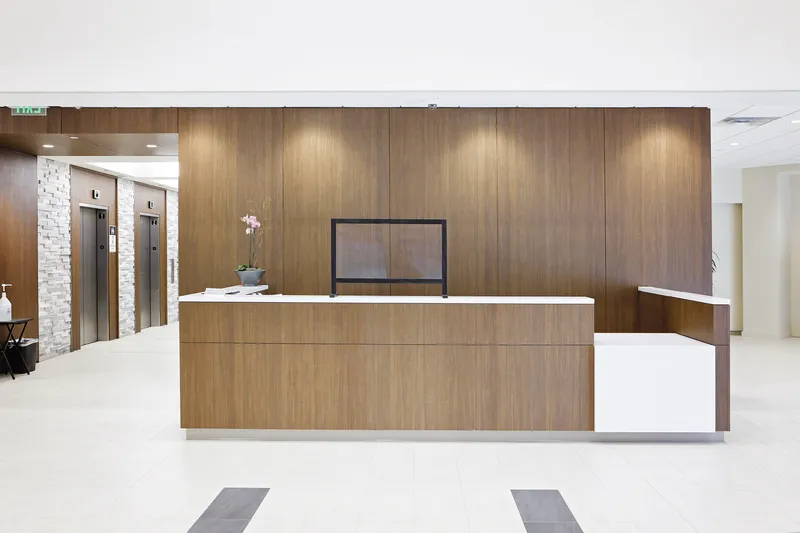
For film to bond and look right, the wall surface needs to be smooth, solid and non-porous. Common candidates include painted drywall, wood and laminate panelling, hard (not acoustic-tile) ceilings, columns, elevator cab walls and doors. Heavily textured, crumbling or moisture-damaged surfaces are not ready as-is, which is why Engineered Group assesses the substrate during the free estimate and specifies any preparation before quoting. The same smooth-solid-non-porous rule applies across walls, ceilings, furniture, millwork, casework and glass.
Wall resurfacing vs painting, replastering and replacement
With private nonresidential spending near $773.0 billion a year, the method you choose decides how much of your budget goes to labour, waste and downtime. The table below compares the four common ways to deal with a dated or damaged commercial wall.
| Approach | What it changes | Downtime & mess | Typical lifespan |
|---|---|---|---|
| Wall resurfacing (architectural film) | New look, colour and texture over the same wall | Low; dry-applied on site, no demolition or dust | Up to 12 years indoors |
| Repainting | Colour only; no new texture or pattern | Low to moderate; fumes and dry time | A few years before scuffs and fading show |
| Replastering / re-skimming | Repairs the substrate; still needs a finish on top | Moderate to high; wet trade, dust, cure time | Depends on the finish applied over it |
| Full replacement | New wall assembly built from scratch | High; demolition, debris, fabrication lead time | Long, at the highest cost and disruption |
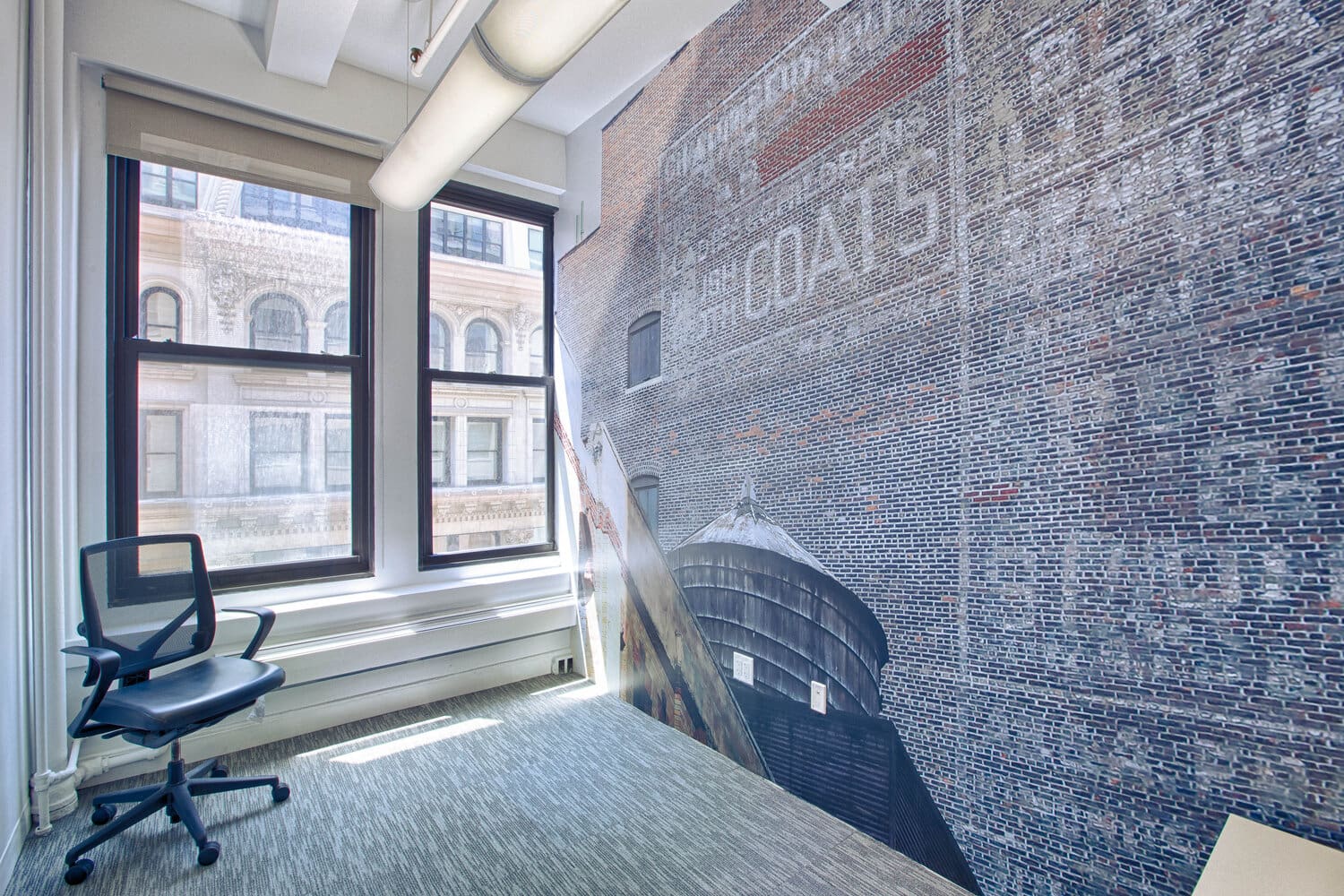
Resurfacing is not the right answer for every wall; a structurally failing surface still needs repair first. But for the far more common case of a sound wall that simply looks dated, film delivers a 3M DI-NOC architectural film finish in wood, stone, metal or abstract patterns without the waste and downtime of the other three.
How the wall resurfacing process works
Engineered Group’s pages describe a dry application process with no wallpaper paste, which keeps the building open while the work happens. In practice a resurfacing job runs in four steps.
- Assess and sample. The crew inspects the substrate, confirms it is smooth, solid and non-porous, and puts a physical sample of the exact finish in your hands before you commit. The estimate is free.
- Prep the surface. Walls are cleaned and any minor imperfections called out in the estimate are addressed so the film lies flat.
- Dry-apply the film. The film is positioned, squeegeed down and any bubbles are smoothed out. There is no demolition, no construction dust and no VOCs, so adjacent spaces keep operating.
- Finish and inspect. Edges are detailed and the surface is checked. The matte coating and high-definition embossing give a realistic texture rather than a flat printed look.
Because nothing is torn out, a floor’s walls, columns and cab interiors can be sequenced so the space is never fully out of service. The 60-foot granite-look wall at the Maitland Colonnades in the Orlando area is an example of resurfacing at architectural scale.
Durability, maintenance and finish quality
Architectural film lasts up to 12 years indoors and about 5 years outdoors, according to Engineered Group’s finishes pages, and it is engineered to take real wear. The surface resists water, dirt and normal handling and cleans with a non-abrasive cleaner or plain hot water. If it chips or scratches, it can be patched so you cannot tell where the repair is.
The finish itself is built from three properties: diffuse reflection for a low-gloss, deep matte look; fingerprint resistance that keeps high-touch walls and doors presentable; and tactility from matte-coating plus embossing so the film feels like the material it represents. Door film additionally carries a Class A fire rating, which matters in corridors and lobbies.
How to choose a wall resurfacing contractor in Orlando
Ask three questions before you hire. First, is the installer trained and certified for pressure-sensitive architectural film? Surface preparation, temperature and experience decide the finish you end up with. Second, do they self-perform or subcontract? One crew across walls, columns, cabs, doors and glass means one schedule and one point of responsibility. Third, will they hand you a physical sample of the exact finish before you commit?
Engineered Group, founded in 2002 and based at 3930 St Johns Pkwy in Sanford, answers yes to all three: it is a 3M authorized installer, self-performs statewide in Florida, and every free estimate comes with a sample. To scope a wall, start with the wall and ceiling resurfacing page or request a free estimate.
Frequently asked questions
What is wall resurfacing?
Wall resurfacing renews a wall’s surface in place by bonding a micro-thin architectural film over the existing drywall, panelling or hard ceiling, instead of tearing the wall out and rebuilding it. The result is a new colour, pattern and texture on the same wall.
How long does resurfaced wall film last?
Architectural film lasts up to 12 years indoors and about 5 years outdoors. It is cleanable with a non-abrasive cleaner or hot water and can be patched so the repair is invisible.
Does wall resurfacing work on textured or damaged walls?
The surface needs to be smooth, solid and non-porous for the film to bond and look right. Engineered Group inspects the substrate during the free estimate and specifies any preparation a textured or damaged wall needs before quoting.
How much does wall resurfacing cost compared with replacement?
Clients typically save up to 60% versus tearing the surface out and replacing it. The exact figure depends on the surface, the substrate and the size of the job, which is why the estimate is free.
How disruptive is wall resurfacing to an operating building?
Very little. The film is dry-applied on site with no demolition, no construction dust, no VOCs and no downtime waiting on fabricated replacement panels, so adjacent spaces keep operating.