Indoors, Engineered Group puts the working life of architectural film at up to 12 years. Outdoors, up to 5. Those two numbers are the honest answer to the question most facility managers ask before they sign anything: if we resurface instead of replace, how long before we are standing here again?
The gap between the two numbers is the useful part. Film does not wear out on a clock. It wears out from exposure — sunlight, heat, cleaning chemicals, hands, carts, and whatever the surface underneath it was doing before the film went on. Settle those and a resurfaced elevator cab or reception desk reads as specified for a decade. Ignore them and you find out in year two. This guide covers what the published figures mean, what shortens them in a Florida building, how to clean film without taking years off it, and the decisions worth making before you ask for a price.
Key takeaways
- Up to 12 years indoors, up to 5 years outdoors. Those are Engineered Group’s own stated figures for architectural film.
- Exposure drives the number, not age. The same film on a sun-facing entrance door and an interior corridor wall will not reach the same year.
- The substrate decides as much as the film. It has to be smooth, solid and non-porous, and the company states the finish depends heavily on surface preparation, temperature and experience.
- Cleaning is where owners quietly lose years. The instruction is a non-abrasive cleaner or hot water.
- Damage is repairable in place. A chip or scratch can be repaired so that you cannot tell where the patch is.
What “up to 12 years” is actually describing
A service life figure is an expectation of normal use, not a promise attached to every panel in the building. Engineered Group states it plainly on its architectural finishes page: architectural film lasts up to 12 years indoors and 5 years outdoors, and the finish resists water, dirt and normal wear well. Read that the way you would read a service life on any other building product. It is what the material does when it is installed on the right surface, in the right place, and cleaned the way the manufacturer intends.
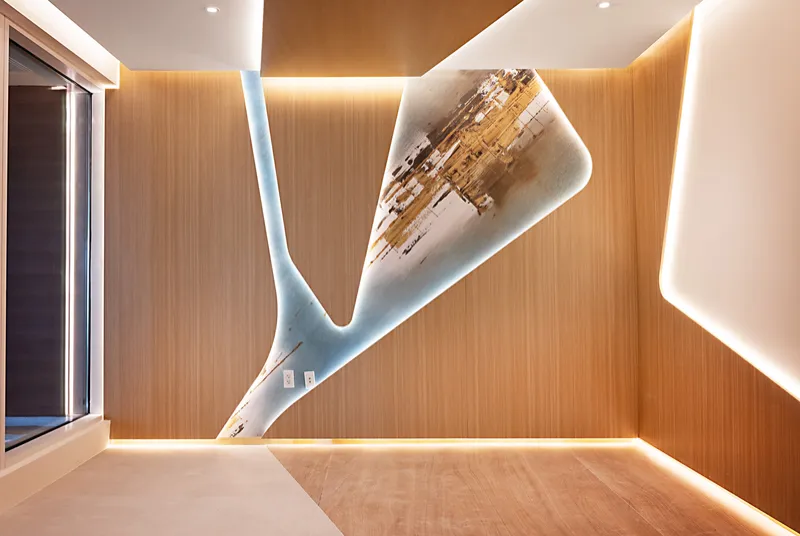
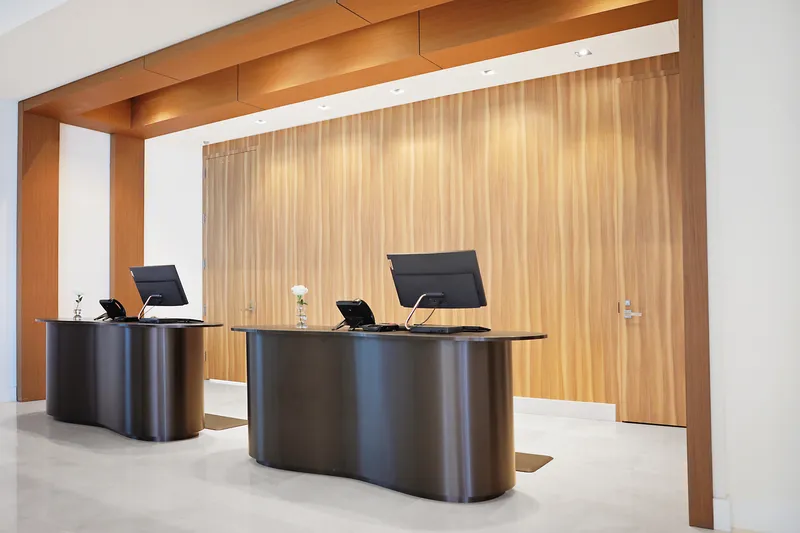
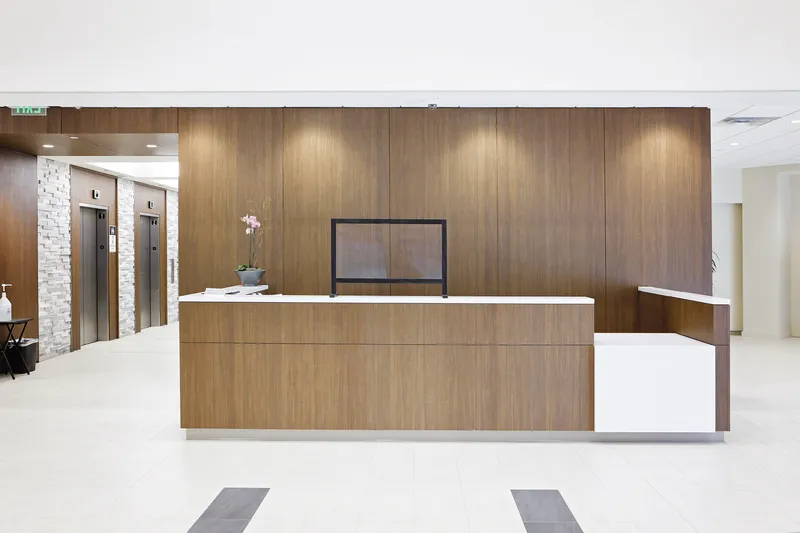
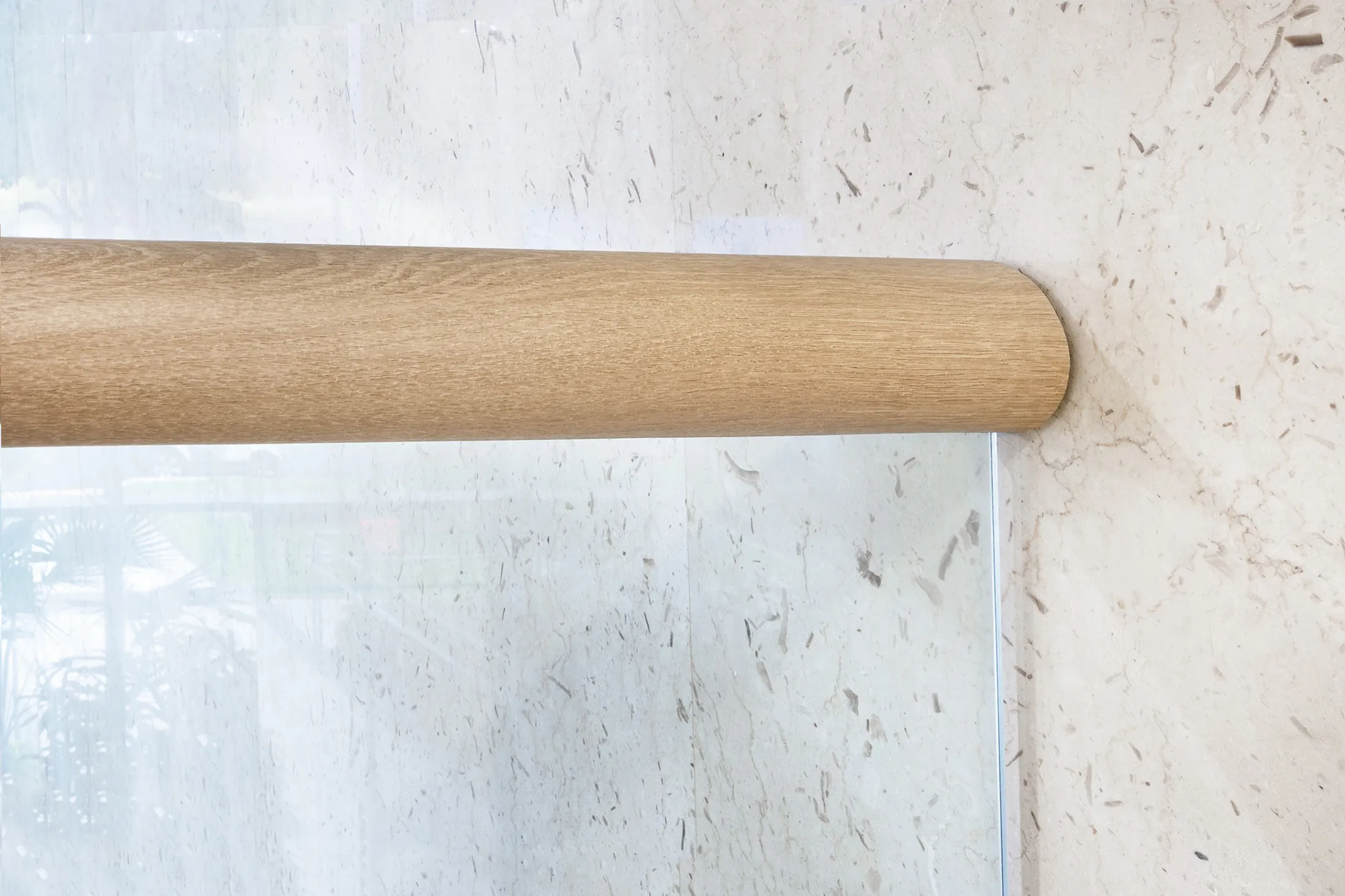
It helps to know what the material is. Architectural film is a thin, flexible finish applied over an existing surface rather than instead of it. The surface stays. The cabinet, the door leaf, the cab panel, the column — all of it stays, and the film goes over the top. Engineered Group works on walls, ceilings, furniture, elevators, columns, doors, millwork, casework and glass, in over a thousand patterns. Nothing is demolished, and the application is dry, with no wallpaper paste involved.
Published figures
What Engineered Group states architectural film will do
Service life is an expectation under normal use. The saving depends on the surface, the substrate and the size of the job.
Source: Engineered Group, Architectural Finishes and 3M DI-NOC product pages, engineeredgroup.com.
Why the outdoor number is less than half the indoor one
Nothing changes about the film when it crosses a threshold. What changes is the weather acting on it. Sunlight, heat and the daily expansion and contraction of the surface underneath are the three things that age a finish fastest, and a Florida elevation gets all three in quantity.
Put a figure on it. At Orlando International Airport, the 1991–2020 climate normal is 109.9 days a year with a high of at least 90°F, and 2025 came in at 125 days. That is roughly four months a year of heat loading on any surface the sun reaches, on top of the ultraviolet exposure that comes with the latitude. An interior corridor sees none of it.
So the practical reading of 12 years and 5 years is not “two products.” It is one product with two duty cycles, and your job on a specification is to decide which one each surface is in. Most buildings have a handful of surfaces that look interior but behave like exterior: the inside face of a storefront entrance, a column in a glazed atrium, a lobby panel that takes direct western sun from two in the afternoon. Treat those as the shorter cycle and the estimate stops surprising you later.
The four things that decide how long a finish lasts
1. What is underneath it
Architectural film needs the existing surface to be smooth, solid and non-porous. That is the whole requirement, and it is also the whole failure mode. A hollow-core door with a sound skin is a good candidate. A wall with a crumbling edge, a panel with a loose laminate, a substrate with moisture behind it — those are repairs that happen before the film, not problems the film covers up. If a surveyor flags a substrate, the honest answer is to fix it or leave it out of the package.
2. How well it was prepared and who put it on
Engineered Group is direct about this on its 3M DI-NOC page: the finish you end up with depends heavily on surface preparation, temperature and experience. Film is forgiving during installation — the dry application means it can be placed and adjusted before it is squeegeed down — and completely unforgiving about what it was laid onto. Dust, residue from a cleaning product, a cold panel in a January lobby with the doors open: each one shows up months later as an edge that lifts.
3. What the surface is asked to do all day
A cab wall at shoulder height and a ceiling panel are the same material doing two different jobs. The table below is the version of this conversation worth having before the estimate, because it is where a generic line item called “resurfacing” turns into a scope.
| Surface | What it takes all day, and where wear shows first | What that changes in the scope |
|---|---|---|
| Elevator cab walls and doors | Shoulders and bags, luggage and housekeeping carts, hands at one height. Wear shows at the door edges and on the lower half of the side walls. | Break the walls into panels that can be lifted one at a time, and record the pattern used. |
| Corridor, stair and guest-room doors | Push plates, pulls, trolleys, door stops and closers. The leading edge and the area around the hardware go first. | Agree who removes and refits hardware, and confirm whether the opening needs the Class A rated film. |
| Reception desks, casework and millwork | Elbows, bags, spills, and more wiping than any other surface in the building. Front edges and transaction tops go first. | Settle the cleaning routine with housekeeping before the job, not after the first mark. |
| Lobby columns and wall panels | Sun through the glazing, vacuum heads and furniture being moved. The face turned toward the glass ages first. | Check how much direct sun each face takes, and treat the worst of them as an exterior case. |
| Entrance doors and surrounds in daylight | Direct sun, heat, driving rain, and salt air on a coastal site. The sun-facing side and any edge where water sits go first. | Use the outdoor expectation, not the indoor one, and plan a shorter refresh cycle. |
4. What it gets cleaned with
This is the cheapest variable to control and the one most often lost between the handover and the first housekeeping shift. More on it below.
How to clean architectural film without taking years off it
The instruction from Engineered Group is short: a non-abrasive cleaner or hot water. That is it. The material is on your side here — the company describes DI-NOC as a resilient non-porous material suited to spaces that are regularly cleaned, and notes that the matte texture gives fingerprint resistance, which keeps the visible marking down on handles, cab panels and desk fronts.
The failures are predictable, and they are housekeeping failures rather than product ones:
- Abrasives. Scouring pads, powders and anything that works by grinding will dull a film finish the same way it would dull a painted one. Non-abrasive is the operative word in the instruction.
- Doing it hard instead of doing it twice. A mark that needs force is a mark that needs a second pass with hot water, not more pressure.
- Nobody being told. The crew that cleans your lobby at 5am did not read the specification. Put the cleaning instruction in the building’s housekeeping sheet on the day the job is handed over.
- New products arriving later. Cleaning contracts change. If the chemical list changes, check it against the finish before it is used on elevator cab panels and millwork tops.
Damage is a panel problem, not a building problem
Here is the part that changes the arithmetic. When a finished surface is damaged, the repair scale is what decides the cost, and film repairs at the smallest possible scale. Engineered Group states that if the material does chip or scratch it can be repaired so that you cannot tell where the patch is, and that because the installation process is quick and clean, repairing or renewing the film later is straightforward.
Compare the alternatives on the same incident. A gouged veneer door is a joinery job: remove the leaf, find a match, refinish or replace, rehang. A damaged solid-surface reception front is a fabrication job. A scratched elevator cab panel is a lead time and a shutdown. A damaged film panel is a film job on the same surface, done in place.
Two things make that work in practice, and both are decisions you make at specification, not at the point of damage. Record the pattern reference for every area in the building, so the repair matches what is there. And plan the panel layout so a single damaged section can be lifted without touching its neighbors. With over a thousand patterns in the range, the one thing you do not want to be doing in year six is guessing which one was used.
What the service life does to the budget
The service life only matters next to what it costs to get it. Engineered Group states that clients typically save up to 60% on an architectural finishes project compared with a full renovation, with the exact figure depending on the surface, the substrate and the size of the job.
Set that against a twelve-year indoor expectation and the comparison a property manager actually needs becomes simple. It is not film against new millwork on day one. It is a resurfacing cycle against a replacement cycle, over the period you will hold the building or the lease. The resurfacing route also avoids the costs that never make it onto the quote: the demolition, the waste, the lead time on new doors and wall panels, and the weeks a floor is out of use.
Scope helps too. Because the same contractor can take the cab, the doors, the columns and the millwork, a lobby, its cabs and its glazing can run on one schedule under one contractor instead of three trades with three mobilizations.
Five questions to settle before you ask for a price
- Which surfaces are genuinely interior? Walk the building at the hour the sun is worst and mark anything that takes direct light. Those are on the shorter cycle, whichever side of the glass they are on.
- What is underneath each one? Smooth, solid and non-porous is the test. Anything that fails it is a repair line, not a film line.
- Who cleans it, and with what? Get the housekeeping chemical list before the job, not after the first complaint.
- How long do you need it to hold? To the end of a lease, to the next refurbishment cycle, or indefinitely. The answer changes which surfaces are worth doing at all.
- Where will the pattern references live? A one-page schedule of area, surface and pattern is the difference between a two-hour repair and a re-do.
Common questions
How long does architectural film last?
Up to 12 years indoors and up to 5 years outdoors, which are Engineered Group’s stated figures. Those are expectations for normal use on a suitable surface, not a guarantee for every panel.
Does it last as long on a door as on a wall?
Not usually, and nothing is wrong when it does not. A wall is touched rarely. A door is pushed, pulled, trolleyed into and stopped against all day, so wear concentrates at the leading edge and around the hardware long before the field of the panel changes.
Will Florida sun ruin it?
Sun and heat are why the outdoor figure is 5 years rather than 12. With a 1991–2020 normal of about 110 days a year at or above 90°F in Orlando, anything taking direct light is on the shorter cycle. The fix is to identify those surfaces at specification and budget for them accordingly.
Can damaged film be repaired, or does the whole surface come off?
It is repaired. The company states a chip or scratch can be repaired so that you cannot tell where the patch is. Keeping a record of which pattern went where is what makes that quick.
Does it need special cleaning products?
No. A non-abrasive cleaner or hot water is the instruction. The material is non-porous and suited to spaces that are cleaned regularly; what shortens its life is abrasives, not frequency.
Is architectural film fire rated?
Engineered Group states that 3M DI-NOC holds an ASTM E84 Class A fire rating, and lists Class A fire-rated door film among what it installs. Confirm the rating required for your specific opening with the design team, because the requirement comes from the building, not the film.
Where to take this next
If you are weighing a resurfacing package against a replacement, the service life is the number that makes the comparison fair — and the four variables above are the ones that decide whether you reach it. Engineered Group works throughout Florida, from Orlando and the rest of Central Florida out to the coasts, on single buildings and multi-site portfolios.
Start with the architectural finishes page for what the service covers and which surfaces are in scope, then send through the surfaces you are considering. A walk of the building, a note of what each surface takes all day, and a pattern schedule are enough to get a scope that holds for its full service life rather than most of it.